
The new BIS Quarterly Review came out! For those who are unaware, BIS stands for “Bank of International Settlements.” I’m here to take notes on interesting charts and notes in the report. Maybe we can learn something together.
Market Reactions to Geopolitical Tensions
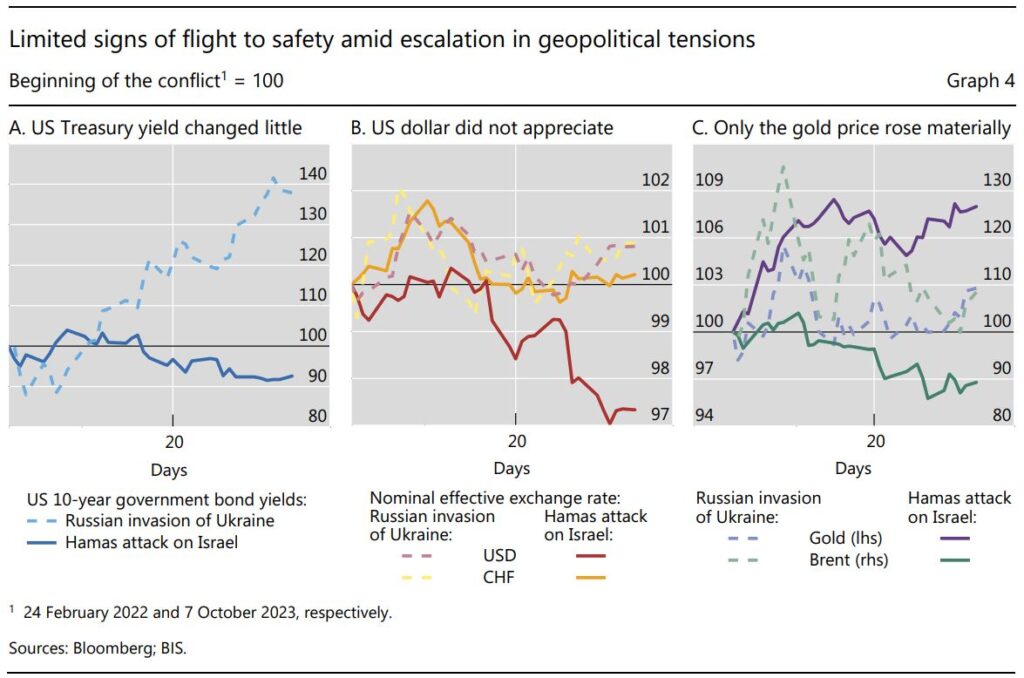
I’m a big fan of comparisons. And charts put side-by-side like this always elicit some insights. US Treasuries remained stable, the dollar fell, and only gold prices rose a bit.
From what I could tell, the effects of US interest rates and inflation data overwhelmed the potential effects of other factors. Over the review period, higher discount rates had a greater effect on US stock prices than expected rises in EPS.
Inflation Environment and Equity vs Bond Correlation
The correlation exists because the market’s focus is on the expected monetary policy. When inflation is low, there’s a negative correlation between equity and bond returns. The opposite is true when inflation is high.
Low inflation: high growth news means lower equity returns and lower interest rates (thus higher bond prices).
High inflation: low growth news means high equity returns and higher interest rates to target inflation (thus lower bond prices).
Tight Labour Market
There are three clear factors to account for the post-pandemic labour tightness (more supply than demand).
- Muted Output per Hour
- Low-production sectors drove employment recovery. The effects are small compared to manufacturing sectors.
- Firms Hoarding Labour
- Tight labour markets can encourage hoarding since hiring is tougher. However, at the same time, supply chain interruptions could encourage increased hiring intentions.
- Workers Want to Work Fewer Hours
- The effects are equivalent to hoarding labour.
If you’re interested, check out our latest News Review!